
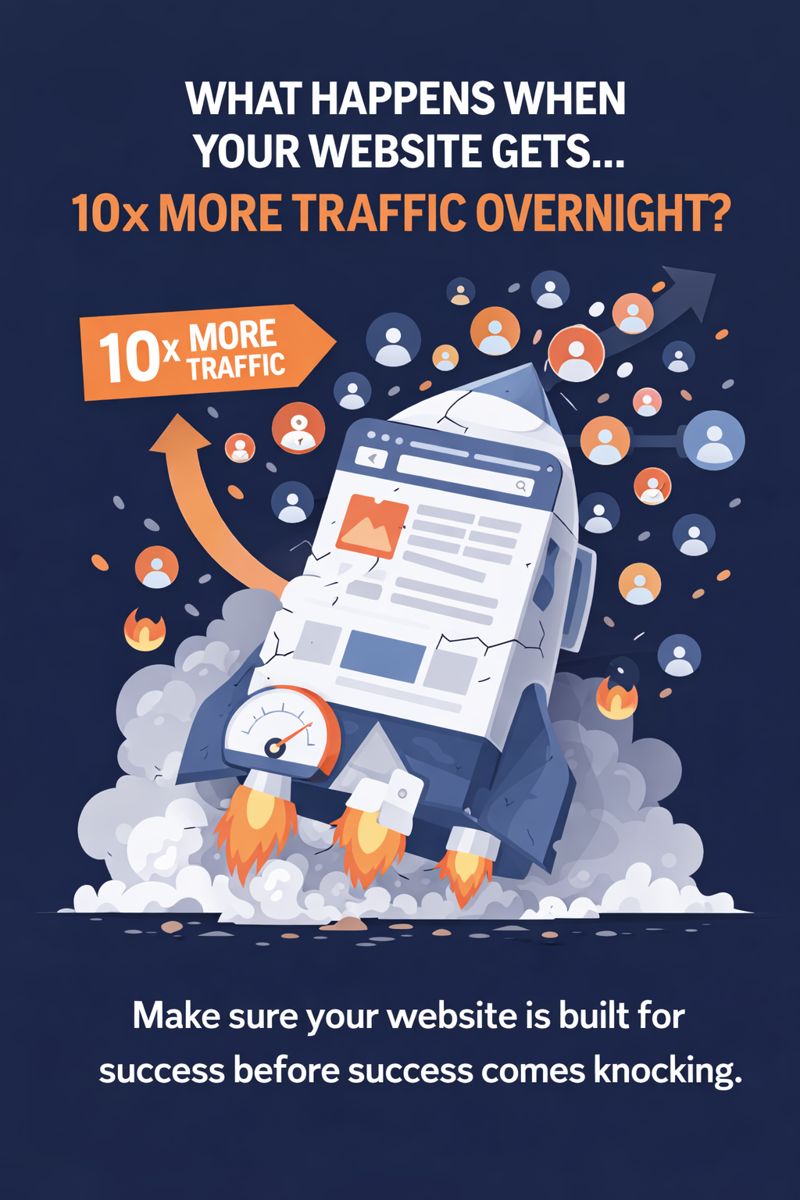
Why Traffic Spikes Happen (And Why They’re Rarely Random)You open your laptop, check analytics, and do a double take. Traffic is up tenfold. Slack pings. Someone screenshots your chart. For five seconds, you feel like a genius.
Then the page slows. A form fails. Someone tweets, “Is this site down?”
This article exists for that moment.
Sudden traffic spikes are thrilling, but they’re also unforgiving. They expose every weakness you’ve been postponing. Hosting, UX, performance, security, conversion paths — nothing hides under pressure. This is a practical guide to what actually happens when your site gets hit with overnight attention, what breaks first, and how to turn a viral moment into lasting growth instead of a cautionary tale.
No fluff. Just what works.
Why Traffic Spikes Happen (And Why They’re Rarely Random)
Traffic doesn’t surge by accident. There’s almost always a trigger.
A journalist links to you. A tweet takes off. Google bumps a page up the rankings. A paid campaign suddenly clicks. Sometimes it’s seasonal. Sometimes it’s pure timing. Sometimes it’s a single person with a large audience pressing “share.”
The first rule is simple: identify the source immediately.
Social traffic behaves differently than search traffic. Referral traffic from a trusted site often converts better. Search spikes can signal long-term opportunity if your site holds up. Bot traffic looks impressive but delivers nothing except server pain.
Before celebrating or panicking, look at referrers, landing pages, device types, and geography. Traffic without context is noise. Traffic with intent is leverage.
What Breaks First
When traffic multiplies, your server feels it first.
Pages load slower. Images lag. Databases struggle. Shared hosting plans choke. Concurrent users hit limits you never knew existed. Sometimes the site doesn’t crash — it just becomes unpleasant enough that users quietly leave.
The danger isn’t always downtime. It’s degradation.
A page that loads in one second normally but five seconds under pressure will hemorrhage conversions. Forms time out. Checkout stalls. APIs hit rate limits. Every second adds friction, and friction kills trust.
The fix isn’t heroic coding at 2 a.m. It’s preparation: scalable hosting, caching, CDNs, and architecture that assumes success instead of hoping it never comes.
The First Seven Seconds: How Visitors Judge You
New visitors are ruthless.
They don’t care why your site is slow. They don’t know you’re “working on it.” They see lag, broken buttons, or confusing navigation and assume the worst.
Mobile users are especially unforgiving. Heavy scripts, large images, or delayed menus push them straight to the back button. Your clever headline goes unread if the page stutters.
During a surge, clarity beats cleverness. Fast-loading pages, obvious calls to action, and simple messaging reassure users. Even a clear “We’re scaling right now” message performs better than silence.
A good crisis UX looks intentional. A bad one looks careless.
SEO: Opportunity on One Side, Risk on the Other
Traffic spikes can help SEO — briefly.
More clicks, more engagement, and new backlinks can signal relevance. But search engines watch performance too. Slow pages, errors, and partial loads during a spike can hurt crawlability and page experience scores.
If bots hit broken pages or timeouts, your rankings can suffer after the excitement fades. Crawl budgets get wasted. Indexing stalls.
The rule is simple: traffic rewards sites that handle it well. It punishes sites that collapse under it.
Treat every surge like a test you want search engines to pass you on.
Security Gets Louder When You Get Popular
Visibility attracts attention — not all of it good.
Traffic spikes often bring scrapers, spam bots, credential stuffing attempts, and sometimes full-blown attacks. Bad actors hide inside noisy analytics because they blend in.
Forms get flooded. Fake sign-ups appear. Server resources get exhausted. If your defenses are thin, a good day turns ugly fast.
Basic protections matter: rate limiting, bot detection, WAFs, strong admin security, and monitoring. Security during a surge isn’t paranoia. It’s hygiene.
You want real users walking through the front door, not chaos sneaking in behind them.
Traffic Is Only Valuable If It Converts
Ten times the visitors means nothing if conversions fall to zero.
Broken funnels, slow checkout, or failed lead forms turn opportunity into loss. Worse, they damage trust. People remember frustration more than features.
A spike can also reveal gold. If conversion rates hold or improve, you’ve found something that resonates. That’s your signal to invest, optimize, and follow up.
Traffic tests your business, not just your website.
How to Prepare Before the Spike Ever Happens
Preparation isn’t glamorous. It’s effective.
Use scalable hosting. Implement caching and CDNs. Optimize images and scripts. Reduce third-party bloat. Load-test key pages so you know where things break.
Have a lightweight fallback page ready. Prepare clear messaging. Know who contacts hosting support. Decide what features can be temporarily disabled without killing conversions.
Planning turns panic into process.
What to Do If It Hits Without Warning
If traffic explodes out of nowhere, move fast and calmly.
Identify the source. Protect the pages people are landing on. Disable non-essential scripts. Serve cached or static versions if needed. Contact your host immediately.
Communicate clearly. A short, honest message beats silence. If security is involved, block aggressively and investigate later.
The goal in the first hours isn’t perfection. It’s stability.
Winners vs Losers of Viral Traffic
Winners prepare, focus, and follow up.
They keep the site fast, guide visitors clearly, capture emails, and turn attention into relationships. They treat the spike like a campaign, not a surprise.
Losers chase vanity metrics, ignore performance, and let trust evaporate. Their traffic fades, and nothing replaces it.
The difference isn’t luck. It’s readiness.
The Real Takeaway
A 10× traffic spike is a gift and a stress test at the same time.
It shows you what works. It exposes what doesn’t. Handled well, it can jump-start growth. Handled poorly, it becomes a missed moment you’ll regret later.
Build for success before it arrives. When the internet knocks loudly, make sure your website is ready to answer.
That’s how fleeting attention becomes lasting momentum.